



Trog app: merging training with playing

Bakery De Trog wanted to keep the knowledge level of all their staff as high as possible, so that they could also take on new employees on a temporary basis in an efficient manner. To this end, the company started using an interactive and adaptive app: BattleBakery. The valueXstream solution teaches De Trog’s processes, policies, and rules in a fun and competitive way.

Organic bakery De Trog from Ypres has been baking traditional bread with organic ingredients for more than 40 years, using both B2C and B2B brands. The range includes fresh, prepackaged, or frozen breads and pastries. De Trog supplies products to various shops and, for example, fills more than half of the bread racks of the Bio-Planet retail chain. In recent years, the company opened the first CO2 neutral bakery in Belgium and sent thousands of loaves of bread to Ukraine to support people living in the war zone.

Well-trained (temporary) employees

To be able to run seven days a week, the bakery supplements the permanent team with flexi roles. But how can you train temporary staff quickly and efficiently and onboard them effectively? For a food company like De Trog, hygiene and food safety are key, as is quality. The challenge is to guarantee that quality in a multilingual environment with ever-changing temporary staff. At the same time, the permanent staff need to regularly refresh their knowledge in an interesting and engaging way. When De Trog changes its way of working, it must immediately integrate this into its training.

BakeryBattle: the app that makes learning fun

valueXstream mapped out a full cost-benefit analysis of the project. “We compare the potential sales increase against the costs, such as the costs of the warehouse, utilities, and picking costs. That forecast revealed that holding stock locally would increase sales by 25% within 10 years,” says Van Hoeck. “In the longer term, we are more flexible with regard to phasing in and phasing out the product range.”

Practical effect

valueXstream offered De Trog a solution in the form of an app: BakeryBattle. Innovation agency NewBird integrated all the necessary knowledge into the app, which encourages repeated use through play. The employees install the app on their smartphone or tablet or access it on their PC, and challenge each other to a battle. A BattleQuiz consists of several questions, with or without illustrations, and the players immediately see the correct answer after answering.

“People like to measure themselves against each other. We use that in the game,” says Marc Van Hoeck of valueXstream. “With BattleQuiz, employees can compete while also learning important information. The app has different levels of difficulty, from easy to advanced, so that staff can progress to a higher level. New employees play BakeryBattle as part of their onboarding. In addition, each employee plays BakeryBattle three times a year during three to four weeks to keep their knowledge completely up to date.”

A handy poll to see the level of knowledge

More than 100 employees, suppliers, and external technicians play BakeryBattle. De Trog sees several advantages to the app. New employees can be deployed in the short term because they learn a lot quickly. An evaluation is also attached to the game results, so management can closely monitor the knowledge level of each employee and provide specific additional training when necessary. The evaluation could even lead to the revocation of access to the factory or the withdrawal of a staff member from certain activities. But that doesn’t prevent the players from having fun with the app. They appreciate the game format and its user-friendliness. Finally, the game also creates a good atmosphere among staff.

Technical environment

The software is a web application that runs as an app on iOS and Android. The app is developed with Backbone, Angular, and Cordova.
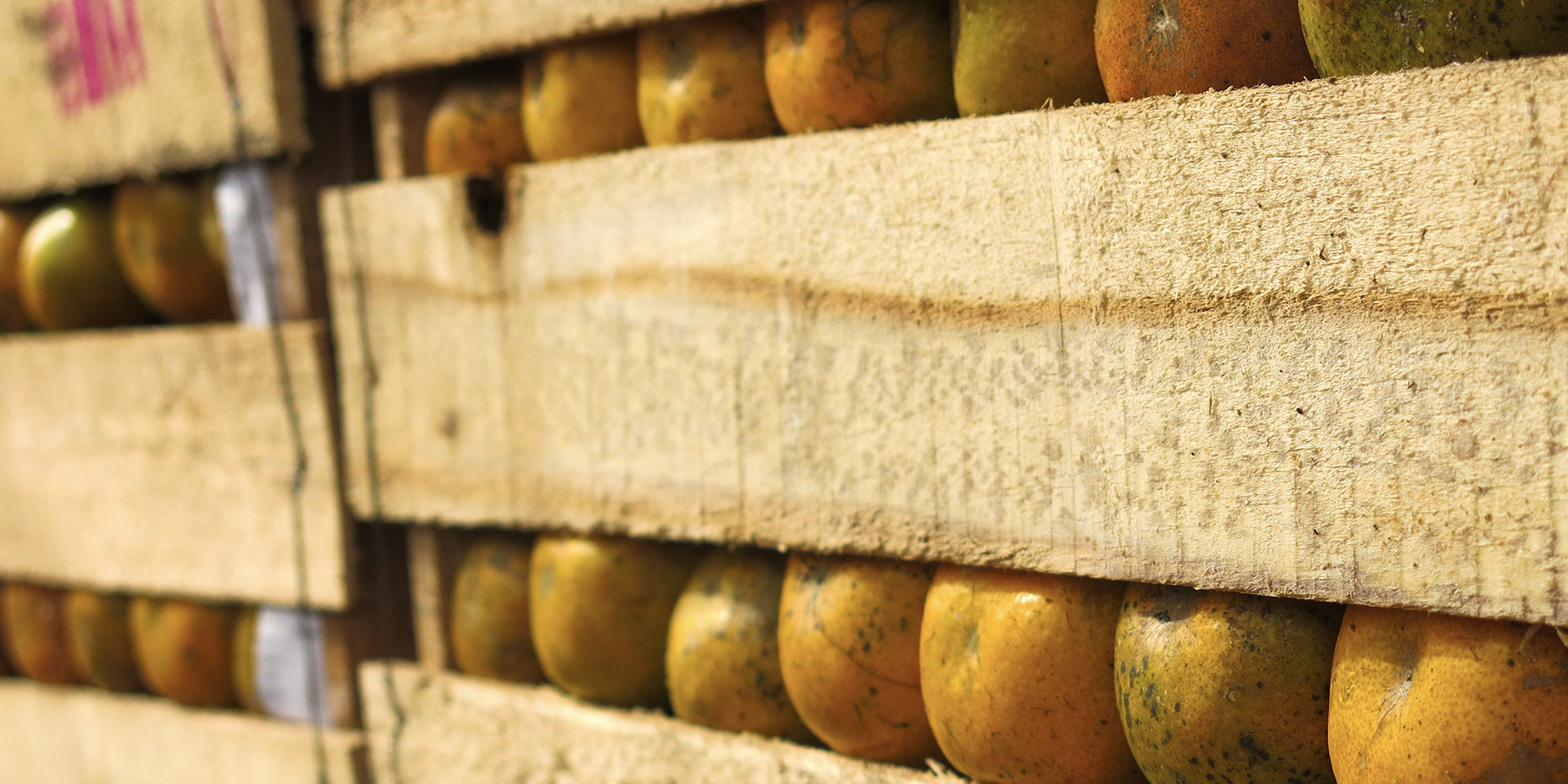
15% more turnover thanks to optimization of the supply chain at importer of southern specialty foods

Until recently, an importer of southern specialty foods was faced with a serious challenge. They didn’t deliver from stock, so customers had to wait up to a week for their orders. The result? Customers ordered small volumes to ensure that their delivery was fresh. valueXstream put their supply chain through a thorough overhaul to achieve efficiency gains and increased turnover.

The premise

Belgian catering suppliers love southern specialty foods, from tapenades and hummus to pesto and oven-dried tomatoes. So the client’s low order volumes had nothing to do with a lack of demand from the market. “The problem was in the supply chain,” says Marc Van Hoeck of valueXstream. “Our client wasn’t holding stock in Belgium, so customers had to wait at least a week for their orders. To ensure fresh products and to prevent waste, they only placed small orders. This meant the company’s turnover stagnated.”

The solution

A logistics assessment was done to discover how the company could deliver faster, with the aim of boosting order volumes. “This exercise showed that setting up a warehouse would drastically shorten delivery times.” A survey of catering suppliers made it clear that this effort would lead to bigger orders.

Cost-benefit analysis

valueXstream mapped out a full cost-benefit analysis of the project. “We compare the potential sales increase against the costs, such as the costs of the warehouse, utilities, and picking costs. That forecast revealed that holding stock locally would increase sales by 25% within 10 years,” says Van Hoeck. “In the longer term, we are more flexible with regard to phasing in and phasing out the product range.”

Practical effect

Based on valueXstream’s research, it turned out that the best solution was to outsource the warehouse management to a logistics partner. valueXstream prepared a request for quotation (RFQ) detailing all requirements in terms of packaging, software, labeling, traceability, and quality control. “We also chose the warehouse location. By documenting everything in detail, we were able to objectively compare the various logistics services providers,” continues Van Hoeck.

“Having their own warehouse and being able to purchase larger volumes meant the company could negotiate better terms from their suppliers. In addition, freight costs also decreased.”

Efficient inventory management and restocking of the local market

The valueXstream experts found major differences in rotation speed. They divided the inventory into three product groups (fast, medium, and slow) to create a more efficient restocking methodology. Each product group has its own order schedule. Fast products, for example, are done per week and per full pallet. For small quantities, the customer negotiated a discount when they order 14 days in advance.

SLA, labeling, and electronic order system

The customer bundles all agreements with its suppliers in a service level agreement (SLA). “To support the client, we created a methodology in Excel,” adds Van Hoeck. “It takes into account historical sales figures, delivery terms, and minimum order quantities.” valueXstream helped the company set up an in-house labeling system and implement an electronic ordering system. “Finally, we also made sure the catering suppliers knew about the faster delivery time,” concludes Van Hoeck.

The result

✔️ From 14 days delivery time to one day for Belgium and two days for the Netherlands. Thanks to the local stockholding and better terms with producers, the company can deliver to its customers much faster.

✔️ Because customers are receiving their orders faster, turnover has grown by 15%. Thanks to faster delivery, catering suppliers can order last-minute in good weather, which has led to a 15% increase in turnover.

✔️ A better overview of stock and order patterns has led to up to 30% less waste in the chain due to longer shelf life. By purchasing larger quantities more cheaply, driving full trucks, and reducing administration, logistics costs were reduced by almost 15%. This saving meant extra cost of stockholding turned out to be almost zero.